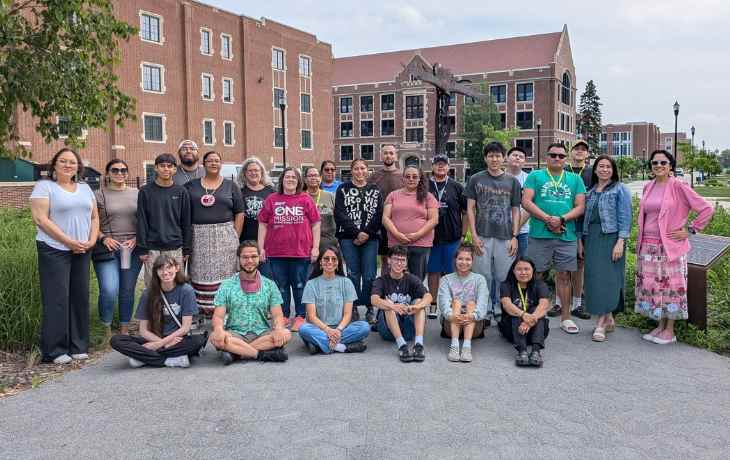
The 2026 Health Sciences Summer Institute at the University of North Dakota brings together Tribal College students from across the country for an immersive experience in health research and career development. Among this year's participants are five students - Tristan, Robynne, Jaylee, Madison, and Kaleb - from Bay Mills Community College who are making their mark as representatives of the BMCC.
A Partnership for Indigenous Health Research
The program is made possible through a collaboration between the University of North Dakota and the American Indian Higher Education Consortium (AIHEC), funded by a NIH NARCH-BIRCH grant. The AIHEC BIRCH (Building Indigenous Research Capacity in Health) project has a vision of "sovereign Tribal Nations asserting full ownership, direction, and control of the health research needed to help their people grow healthy and strong". This initiative aims to address the critical shortage of Indigenous healthcare providers and researchers—a shortage that perpetuates health disparities in tribal communities.
The Health Sciences Summer Institute provides Tribal College students with a platform to develop research expertise while connecting with peers and faculty in a supportive environment. Students participate in hands-on learning, explore health sciences research from an indigenized perspective, and gain exposure to career pathways in healthcare and research. The program includes instruction from UND's Indigenous Health Department faculty, and AIHEC covers the full cost of participation, including travel, accommodations, and a stipend.
This initiative builds on the long-standing tradition of the Indians into Medicine
(INMED) program at UND, which has been supporting Indigenous students in health professions
for decades. Program alumni have described the Summer Institute as a "home away from
home," where students receive not only academic support but also personal support
to navigate the challenges of pursuing healthcare careers far from their home communities.
Former INMED director Eugene DeLorme captured the program's impact when he described
the profound reward of watching students "cross that stage and get their M.D. degree"—students
who first came to the program as seventh graders and progressed through all five years
of the Summer Institute.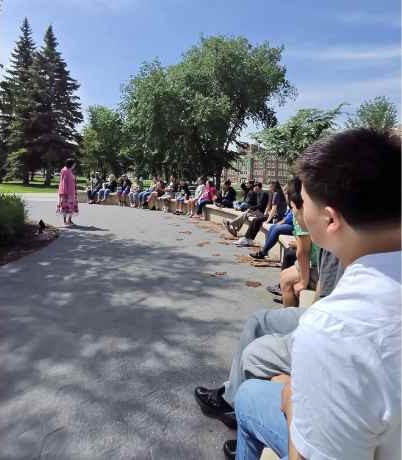
The Pikes Make Their Mark
For Tristan, Robynne, Jaylee, Madison, and Kaleb, this experience represents an opportunity to step into a pathway that has led hundreds of Indigenous students toward successful careers in medicine, physician assistant studies, public health, and other health sciences fields. As Pikes, they carry the hopes of their community and serve as role models for future generations of Indigenous health professionals.
The need for this kind of programming is clear: studies show that communities with tribal healthcare providers and researchers have higher treatment adherence and fewer serious illnesses. Programs like the Health Sciences Summer Institute help expand the health research and education career pipeline, recruiting and supporting Indigenous students to pursue health careers that will ultimately strengthen tribal communities.
As the 2026 session concluded, these five BMCC students have now joined a network of Indigenous scholars who are building the skills and relationships needed to improve the health and well-being of Native peoples across the country.
Photo 2 Credit: American Indigan Higher Education Consortium (AIHEC) Facebook.
Media Contact:
LaTara LeBlanc
Student Engagement Specialist
Bay Mills Community College
[email protected]
Media Contact:
Chelsey Cameron
Media & Marketing Specialist
Bay Mills Community College
[email protected]